The one the coaches skip
Monserrate
A cotton heir's Moorish-Gothic palace at the bottom of the hill, wrapped in gardens that most Pena-bound visitors never see.
Monserrate is the Sintra palace people run out of time for, and that's its whole appeal. Francis Cook, an English cotton heir, built it in the 19th century as a romantic mash-up — Moorish, Indian and Gothic all at once, which sounds like it shouldn't work and somehow does. Walk into the central atrium and look up at the octagonal dome, modelled on the one over Florence's Duomo. The Music Room fills the entire north tower, built — so its reputation goes — with its acoustics in mind. The piece our team sends people for, though, is the filigree corridor: rose-pink marble and plaster carved into stone "lace" arches, as fine as anything you'll see in Andalusia. Then there's the park, which is larger than the palace and mostly hidden below and around it — fern valley, waterfall, Mexican garden, a ruined chapel. Half a day disappears here easily.
The gardens are bigger than the palace, and most of them are hidden below the house where you can't see them from the door.
What to see
- The filigree corridor — rose-pink marble and plaster carved into stone 'lace' arches
- The central atrium's octagonal dome, modelled on Florence's Duomo
- The Music Room filling the whole north tower
- The Mexican Garden — agaves, aloes, yuccas and Bunya pines on a sun-baked terrace
- The fern valley, the Beckford waterfall, the rose gardens and a ruined-chapel folly
The thing nobody tells you: the palace is the smaller half of the visit. The real Monserrate is the park spilling downhill and out of sight — fern valley, waterfall, Mexican terrace, chapel ruin — and if you judge your time by the building alone, you'll badly underestimate it.
Why visit Monserrate
Here's the honest trade-off: Monserrate doesn't have Pena's painted-castle-above-the-clouds drama, and it's a 16-minute bus ride past the famous stops, so it asks for commitment. Would we put it ahead of Pena or Regaleira for someone with a single rushed day? No. But if you've got a half-day spare, or you've already done the big two and want the opposite experience — quiet, green, unhurried — this is the best afternoon in Sintra. It rarely sells out, you don't set an alarm to beat queues, and you can wander the fern valley without a coach group breathing down your neck. Skip it only if your day is already packed tight and you'd be rushing the gardens, because rushing the gardens is the one way to get Monserrate wrong. Otherwise, this is the calm antidote to Pena's scrum.
The full story
Most write-ups credit the whole palace to Sir Francis Cook, the textile magnate who bought the estate in 1863 and was made 1st Viscount of Monserrate. But the octagonal core predates him: it survives from the Neo-Gothic castle Gerard de Visme built in 1789, the same shell William Beckford leased from 1794 and landscaped. Cook's architect wrapped that bone structure in Gothic, Mughal and Moorish skin. Inside, the rooms reward slow looking. The Central Gallery runs the length of the house in Moorish plaster relief, carved with leaves, birds and flowers in pink, orange and bluish tones, the garden pulled indoors. The Library was Cook's sober study, its walnut door carved with Diana the huntress and the one main room that closed behind its own door. The Dining Room hung a cloth awning over the table for acoustics, and a service lift from the kitchen below still works today. There's collector's intrigue too: Cook bought a marble St Anthony for the Sacred Art Room specifically because it once belonged to Beckford. The estate's fame is older still: Lord Byron praised it in Childe Harold's Pilgrimage in the early 1800s, which turned a quiet hillside ruin into a fixture on the British traveller's map. Garden zones were planted by world region under a named design team. The estate joined the European Route of Historic Gardens in 2020.
Getting there
Take the 435 bus from the station — it's the loop that links the town's western sites. Monserrate is the furthest stop on its run, roughly 16 minutes out, after the bus passes Quinta da Regaleira and the Seteais palace. Stay on past those if you're heading straight here. Because it's the end of the loop, the ride back retraces the same stops, which makes it easy to pair Monserrate with Regaleira on a single bus.
Plan your visit
It's a 16-minute bus ride to the furthest stop on the loop and a steep, sprawling site once you're there — so it eats more time than people budget. Don't tack it onto an already-full day; if you arrive with only 90 minutes, you'll rush the gardens, which is the one way to waste the trip.
Walking straight up to the palace first. Do the gardens first — native forest, the Beckford waterfall, the chapel ruin, the Mexican garden, the roses — then climb the lawns up to the house. Go the other way and you'll tour the palace, then leave thinking you've "done it," never realising the gardens you skipped were the best part.
Accessibility
The park is steep and built on a hillside — paths run well below and around the palace, with real climbing between the gardens and the house. The gardens-first route (down, then back up the lawns to the palace) means a sustained uphill return. Wear proper shoes; this is not a flat stroll. Anyone with limited mobility should plan around the slopes carefully.
Good to know
- The ticket office shuts 12:00-13:00 for lunch, but self-service ticket machines stay available, so you can still get in over the midday gap.
- Hours differ between park and palace: the park runs 09:00-19:00 (last entry 18:00), the palace 09:30-18:00 (last entry 17:30). Do the palace earlier in the day.
- Roof restoration is scheduled to run until early 2027, so expect scaffolding and temporary covering on parts of the exterior. Worth knowing before you frame your photos.
- Inside, everything radiates from the octagonal atrium. The natural flow is the marble staircase of honour, then atrium, then the social rooms, then dining and the service areas, with the upstairs gallery (now the interpretation centre) looking down into the octagon.
- A cafe/restaurant is on site. Toilets, parking and shop specifics aren't published, so don't count on detail until you arrive.
- The gardens sit on a sloped hillside and the palace upper floor is reached by the marble staircase. If anyone in your group has mobility needs, check current step-free options with the venue ahead of your visit; assistance dogs are allowed and water bowls are provided.
- It sits out on the Sintra-Colares road, away from the main hilltop cluster, so it's usually quieter and less crowded than the central palaces.
Find the filigree corridor and stand in it — rose-pink marble and plaster carved into stone "lace," as fine as anything in Andalusia. It's the single thing here you won't see anywhere else in Sintra.
Monserrate: your questions
Is Monserrate worth it if I've already seen Pena and Regaleira?
Yes — arguably it's the best reason to go. It's the opposite experience: quiet, green and unhurried instead of crowded and dramatic. After the big two, it's the calm wind-down to a Sintra day.
How do I get to Monserrate from Sintra station?
Take the 435 bus to its furthest stop, about 16 minutes out. It passes Quinta da Regaleira and the Seteais palace on the way, so stay on past those.
How much time should I set aside?
Half a day ideally, two hours at the absolute minimum. The park is large and mostly hidden below the palace, so it always takes longer than the building suggests.
Do I need to arrive early to beat the crowds?
No. Monserrate is off the coach circuit and rarely sells out, so you don't need to set an alarm. An afternoon visit works fine — most visitors never make it this far down the hill.
Should I see the palace or the gardens first?
Gardens first. Do the native forest, waterfall, chapel ruin, Mexican garden and roses, then climb the lawns up to the palace. Go palace-first and you'll miss the gardens hidden out of sight below it.
How do I get to Monserrate from Sintra train station without a car?
Two bus options run from near the station: the 1253 (Carris Metropolitano) or the 435 (Scotturb). The hop-on-hop-off electric shuttle was noted as temporarily out of service, so check its current status rather than relying on it. From Lisbon, take the Sintra line and change to a bus at Sintra.
Is there food on site at Monserrate?
Yes, there's a cafe/restaurant on the estate, though no menu is published in advance. Since the grounds are large and on a hillside, it's a useful stop midway. There are also picnic-friendly spaces, so packing your own is a fair backup.
Is the palace fully open during the restoration work?
The palace and gardens remain open to visit. Roof restoration is scheduled to continue until early 2027, which means scaffolding and temporary covering on parts of the exterior during that window. The interior rooms and the gardens are unaffected by the roof work itself, so the experience inside stays intact.
Explore more of Sintra
 The one everyone comes for
 Pena Palace
Sintra's most-photographed sight — book the first slot and treat it as a two-hour commitment, not a quick stop.
Read the guide →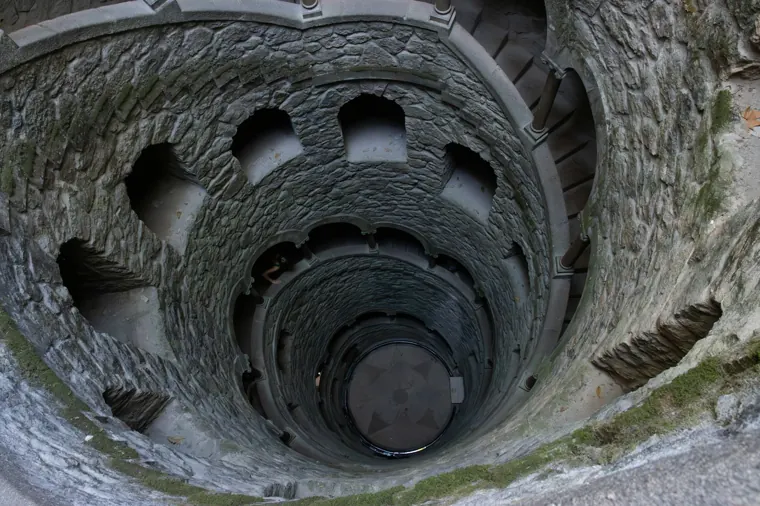 The one you walk into, not up
 Quinta da Regaleira
An early-1900s estate built as a coded garden — the descend-the-well-and-exit-the-tunnel move is the whole point.
Read the guide → The tower everyone underrates
 Sintra National Palace
The town-centre palace people photograph from the square and then walk straight past.
Read the guide →