Sintra's most humbling little place
Convento dos Capuchos
A 16th-century friary where Franciscan monks lined their cells in cork — cork over comfort — and you duck through doorways built low on purpose.
Let's be honest about Capuchos: after Pena and Regaleira, a cluster of cramped cork-lined cells in the forest can sound like an anticlimax — and that is the whole point. Franciscan friars built this 16th-century retreat to be poor on purpose. They lined the cells, doorways, even the stone benches in cork — you can still see the texture and catch its smell — as a deliberate vow of poverty: cork over comfort. The doorways are tiny and low, so you duck and squeeze through, Alice-down-the-rabbit-hole style. Inside the warren are a chapel, a kitchen, penitential cells carved straight into the rock, and cavern and grotto spaces wedged between giant granite boulders the friars simply built around rather than moving. It's small, but the squeeze-through layout makes it feel bigger and stranger than its footprint. This is one of Sintra's quietest, least-visited sites — and the austerity, not any spectacle, is what stays with you.
The monks lined their cells, doorways and even the stone benches in cork — not for warmth, but as a deliberate vow of poverty: cork over comfort.
What to see
- Cork-lined cells, doorways and stone benches — still textured, still faintly smelling of cork centuries on
- The tiny low doorways you physically duck and squeeze through, Alice-in-Wonderland style
- Penitential cells carved directly into the rock
- Cavern and grotto spaces wedged between huge granite boulders the friars built around
- The chapel and the cork-lined kitchen — domestic life stripped to the bone
The austerity is the attraction — not a disappointing substitute for grandeur. Go in expecting "small and bare" rather than "spectacular," and the restraint stops reading as a letdown and starts being the most moving thing you'll feel in Sintra all day.
Why visit Capuchos
Would we send a first-timer with one day in Sintra here ahead of Pena or Regaleira? No. The drama isn't visual — it's the idea: people chose to live wedged between boulders, behind cork, in cells you can barely stand in. But if you have a second day, or you're the kind of traveller who finds a packed Pena terrace exhausting, this is the antidote. It's peaceful in a way almost nothing else in Sintra is, and the restraint is genuinely affecting once you slow down to it. Skip it if your patience for "small and contemplative" is thin, if you can't arrange return transport (see below — this is the real dealbreaker), or if low doorways and uneven rock won't work for your group. Everyone else: give it an unhurried hour and let the quiet do its work.
The full story
Built in 1560 and formally the Convent of the Holy Cross of the Sintra Hills, this place was commissioned by D. Alvaro de Castro to fulfil his late father's vow, and Franciscan friars of strict observance lived here for roughly 250 years. The whole design is a philosophy, not a decoration: walls and chapels are wedged between enormous granite boulders so the building merges with the forest, the idea being to worship the Creator through His creation. You enter through the Boulder Gate, also marked the "Door of Death," signalling renunciation of the world. Inside, the Church holds a marble altarpiece given by the Castro family, with their coat of arms set to the left of the altar. The Chapel of the Passion of Christ keeps its 18th-century azulejo tiles, and the Chapter House once held a statue of Our Lady of Sorrows. Out on the forest trail, the Hermitage of Our Lord in Gethsemane carries frescoes of St Francis and St Anthony attributed to Andre Reinoso. By legend, Friar Honorio chose a cave in the rocks over his own cell and lived there for three decades. The convent was abandoned in 1834 after religious orders were suppressed, bought by the Portuguese State in 1949, folded into the UNESCO Sintra landscape in 1995, and a mid-2010s conservation programme later won a 2022 Europa Nostra award.
Getting there
There's no direct bus to the door. Most people come by taxi, tuk-tuk, or car — it sits roughly 7 km deep in the forest on a remote access road. The walkable alternative: take the 435 bus from Sintra town to Monserrate, then follow the forest footpath about 2.5 km (around 35 minutes) on to Capuchos. If you drive, there's a free car park on site. The entrance is easy to miss, so watch carefully as you approach.
Plan your visit
There is no café or restaurant on site — only a tiny shop and toilets — so bring water, especially in summer. The doorways are low and the rock is uneven; you'll be ducking, squeezing and stepping over thresholds throughout.
Not planning the transport. People arrive without a return ride arranged and get stranded — no taxis wait out here, ride-share drivers may decline the remote pickup (especially at peak times), and there's no bus to fall back on. Fix it in one move: agree a pickup time with your driver before you set off.
Accessibility
Be realistic: this is uneven rock, low carved-stone doorways you duck and squeeze through, and narrow grotto passages between boulders. It does not suit wheelchairs, prams, limited mobility, or anyone uncomfortable in tight, low spaces. Wear proper shoes — surfaces can be damp and slippery in the forest.
Good to know
- This is the most remote of the Sintra hill monuments. From Sintra town it's a local bus, a taxi, or roughly a 40-minute walk. Bus operators in the area were reorganised recently, so check the current route number before you set out.
- Facilities on site include toilets, a tea-room, a shop, parking and a marked picnic area. The ticket office closes 12:00 to 13:00, but automatic ticket machines cover that gap.
- The interior is not accessible. Floors are slippery, irregular and dimly lit, and the cell doorways are deliberately low and narrow. There's no published step-free route or step count, so reduced-mobility visitors should contact the site directly to check current access. A companion for a registered disabled visitor enters free.
- The best things are easy to miss because they sit out in the forest, not in the core building: the Cave of Friar Honorio, the outlying hermitages, and the Crucifixion hermitage, which sits on top of boulders and doubles as the best viewpoint over the hills toward the distant Atlantic.
- Start at the Garden House Interpretation Centre for context, then follow the numbered circuit: courtyards, church and chapels, cells and refectory, infirmary and library, cloister, and finally the forest hermitages.
- The fountain water is not drinkable. Site rules also forbid fires, picking plants, litter, smoking and dogs.
- Restoration has been ongoing here, and one source flagged possible temporary closure. Check the live status before you travel, and verify opening hours, which vary seasonally between roughly 09:00-17:30 and 09:00-18:00 with last entry at 17:00.
Stand inside one of the cork-lined cells, put your hand on the cork, and just be quiet for a minute. That single still moment is the whole reason to come — not any view or photo.
Convento dos Capuchos: your questions
Is there a bus that goes to Convento dos Capuchos?
No bus stops at the door. The nearest workable option is the 435 to Monserrate, then a forest footpath of about 2.5 km (around 35 minutes) to Capuchos. Otherwise most people come by taxi, tuk-tuk, or car.
How do I get back out if there's no bus?
Arrange it before you go. No taxis wait on site and ride-share drivers may decline the remote return at busy times, so agree a pickup time with a driver in advance rather than hoping to flag one when you're done.
How long should I budget for a visit?
Around an hour for the core complex at an unhurried pace, plus roughly 30 minutes if you walk to the viewpoints. It's small, but the duck-through warren of cells and grottoes makes it feel longer.
Is there anywhere to eat or buy food?
No. There's only a tiny shop and toilets — no café or restaurant — so bring your own water and a snack, particularly in warm weather.
Is it suitable for wheelchairs, prams, or anyone with limited mobility?
Not really. Expect uneven rock, low carved doorways you duck through, and narrow passages between boulders. It doesn't suit wheelchairs or prams, and anyone uncomfortable in tight, low spaces should think twice.
Why is it called the Cork Convent?
Cork from the estate's own oak trees was used to line the cells, benches and finishes as insulation against the damp hill cold, which earned it the popular name Cork Convent (Convento da Cortica). The cork oak, Quercus suber, still grows in the surrounding forest. The friars slept on the floor on a straw mattress or a sheet of cork rather than beds.
Is the forest around the convent worth exploring?
Yes, and it's part of the visit. The grounds are a protected primitive forest along a nature trail, with several rare species. The most notable is the ivy-leaved fern (Asplenium hemionitis), in imminent danger of extinction, with the Sintra populations the only surviving ones in the whole Iberian Peninsula. You'll also pass strawberry trees, holly, sweet chestnut and laurel.
How long does a visit take and what should I expect?
Plan for roughly an hour to an hour and a half, though that isn't officially fixed. The appeal here is scale and rawness rather than grandeur. It's small and austere by design, with body-height cork-lined cells, low doorways you duck through, and chapels built into raw granite. Wear sturdy shoes for uneven rock and expect low light indoors.
Explore more of Sintra
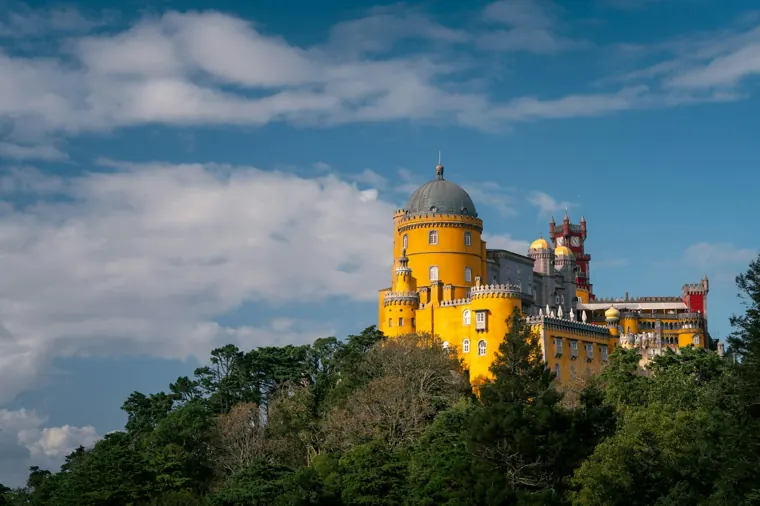 The one everyone comes for
 Pena Palace
Sintra's most-photographed sight — book the first slot and treat it as a two-hour commitment, not a quick stop.
Read the guide →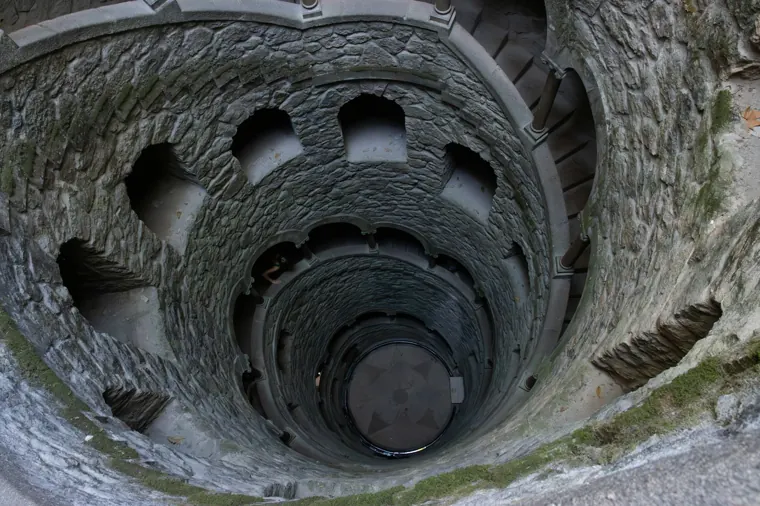 The one you walk into, not up
 Quinta da Regaleira
An early-1900s estate built as a coded garden — the descend-the-well-and-exit-the-tunnel move is the whole point.
Read the guide →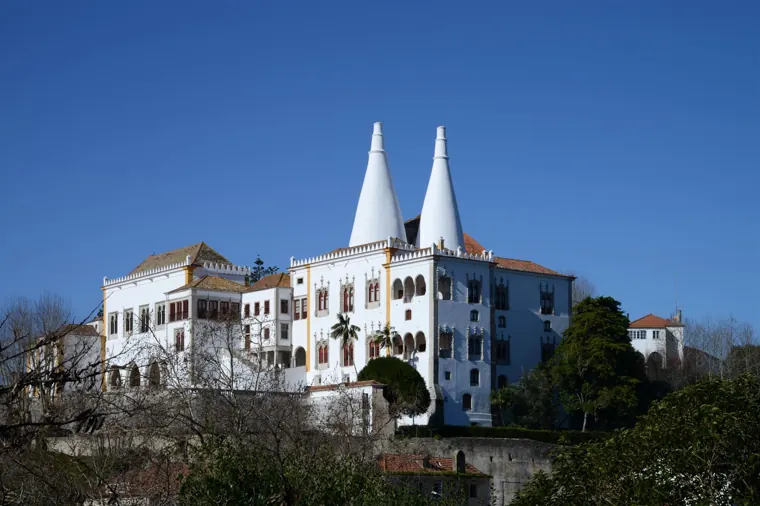 The tower everyone underrates
 Sintra National Palace
The town-centre palace people photograph from the square and then walk straight past.
Read the guide →